What to Check Before You Offer on a Resale Flat in Greater Noida West
In Greater Noida West a flat can be finished, lived in for years, and still not registered in anyone's name. Here is what to check before you offer.
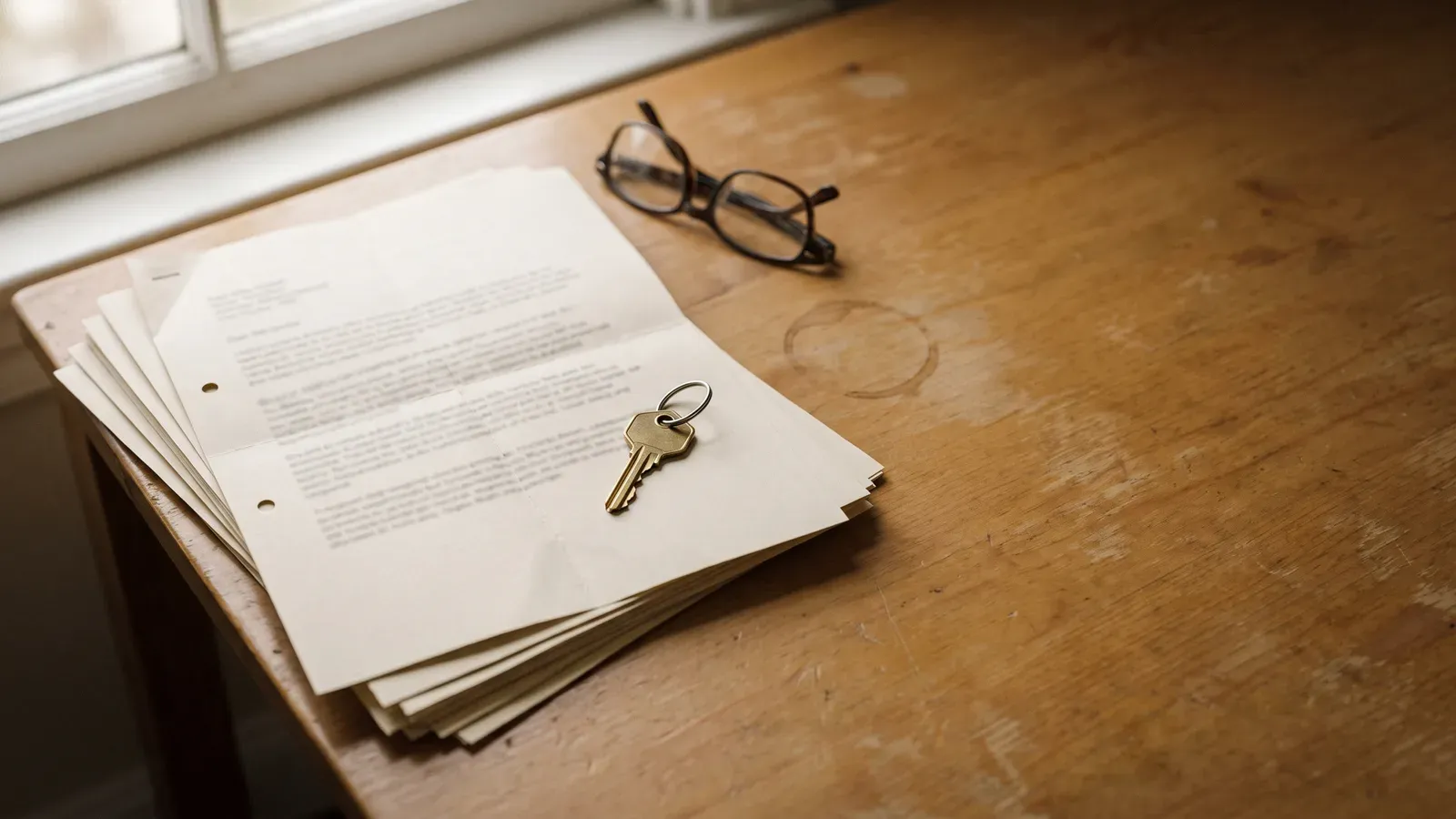
A flat in Greater Noida West can be finished, handed over, painted, furnished and lived in for years, and still not be registered in anybody’s name. The family inside it paid the builder in full. They have a possession letter, an electricity connection and a maintenance bill. What they do not have is a registry, which is the only thing that makes them the owner in the eyes of the state.
If you are looking at resale there, that is the first thing to settle about the specific flat in front of you. Before the price. Before the floor and the view.
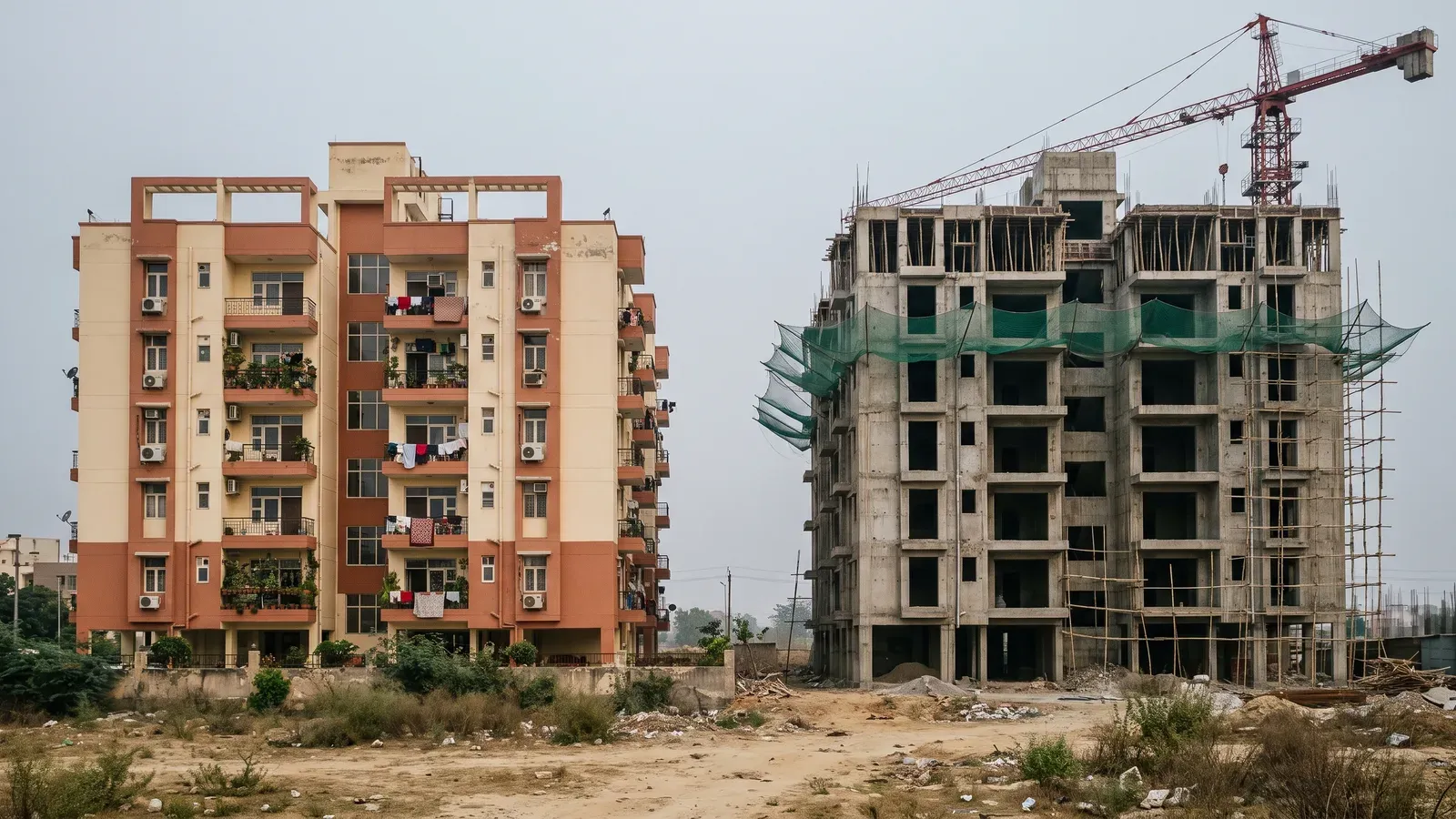
Why a finished flat can have nobody’s name on it
The land under most of Greater Noida West does not belong to the builder. It belongs to the Greater Noida Industrial Development Authority, which leased it to the builder for a term of years. So the builder never sold you land. It sold you a flat sitting on land it is renting.
That means your ownership does not arrive by a simple sale deed between you and the builder. It arrives through a sub-lease, a registered document signed by three parties: you, the builder and the Authority. It is normally executed after the project is complete, the occupancy certificate is issued and you have paid in full.
The Authority signs. And the Authority is also the builder’s landlord, waiting to be paid. Where a builder has not cleared what it owes on the land, registries in that project have been held back. The flat can be complete and full of residents, and the third signature simply does not come.
Nothing about that is the buyer’s fault, and nothing about it is the buyer’s to fix.
How big this is in Greater Noida West
On 2 February 2026 The Daily Jagran reported that more than 50,000 flat registrations are stalled in Greater Noida West, affecting around 4.5 lakh residents across 88 completed societies. The same report puts more than 60,000 cases before UP-RERA, about 60 per cent of them over possession that never came and about 20 per cent specifically about flat registration.
Those numbers come from one newspaper and we have not found a second outlet carrying them, so treat them as one report rather than a settled count. The scale is not in dispute even if the exact figure is.
What was supposed to fix it
In August 2023 a committee headed by Amitabh Kant recommended, among other things, that registries and sub-leases for genuine homebuyers should go ahead and should not wait on the recovery of money owed by builders. The Uttar Pradesh cabinet approved implementation on 19 December 2023. About one lakh homebuyers were expected to benefit.
It has moved, slowly. In December 2024 ThePrint quoted a Greater Noida Authority officer saying around 10,000 flats had been registered in the previous six months under the package, with 78 of the 98 pending projects in the region having accepted it. The same piece cited a homebuyers’ association putting roughly 75,000 flats in Noida and Greater Noida still waiting.
That is the most recent figure we could stand behind. We have not found a 2025 or 2026 number for how many registries have actually happened, and we are not going to estimate one. What it tells you as a buyer is simple enough: some societies have come through, many have not, and the only thing that matters is which of the two your flat is in.
1. Ask for the registered document, not a substitute
Ask the seller one question: has the sub-lease for this flat been registered, and in whose name?
Then ask to see it. Not the allotment letter. Not the builder buyer agreement. Not the possession letter, and not a stack of paid receipts. None of those make anyone the owner. The document you want carries the sub-registrar’s endorsement, a registration number and a date.
If the answer is anything other than a registered document you can hold, you are not buying a flat. You are buying the seller’s position in a queue.
2. Verify it yourself at the sub-registrar
A photocopy proves very little. Registered deeds for this district are held by the sub-registrar in Gautam Buddh Nagar, and a certified copy can be obtained from that office. Check the names, the tower and the flat number on it against the flat you actually stood in.
Ask for the certified copy. If the seller will not get one, or keeps promising it for next week, that is your answer arriving in a slow and polite form.
3. Check the occupancy and completion certificates
These are two different pieces of paper and both matter.
A completion certificate says the building was actually built to the plan that was sanctioned. An occupancy certificate says the competent authority permits people to live in it, and that water, drainage and electricity are provided for. Under the Real Estate (Regulation and Development) Act, 2016, obtaining these and passing them on is the builder’s job, not yours.
Ask which tower your flat is in and ask for that tower’s certificates, with the number and the date on them. Societies get these in phases, so “the project has OC” and “your tower has OC” are not the same sentence.
4. Look the project up on up-rera.in
Do this yourself rather than take anyone’s word for it, ours included. The UP-RERA portal lets anybody search registered projects, completed projects, registered agents and complaint status without logging in.
It also publishes a list of projects placed in abeyance. That list moves: UP-RERA put around 400 projects into that category in July 2024, and in November 2025 it took 22 of them off, covering 8,856 units across seven districts. So check the list on the day you are checking, not from something you read a year ago.
While you are there, read the complaints filed against the project. A pattern of registry complaints from the same society tells you more than any brochure.
5. Ask what the builder owes the Authority
Put it to the builder in writing, and put it to the Authority as well. How much is outstanding on the land, and has this project accepted the state’s rehabilitation package?
You are allowed to ask. A builder who will not answer that question in writing has answered it.
6. Ask the residents, not the seller
Every society has a residents’ association, and in this belt there are active homebuyer bodies too, including NEFOWA, the Noida Extension Flat Owners’ Welfare Association. Ask them the only question that counts: how many flats in this society have had their registry done?
If the honest answer is none, then the flat you are looking at is not going to be the exception, whatever the seller believes.
7. Ask what the transfer will cost, and ask your bank
On leasehold land the Authority charges a transfer fee of its own when a flat changes hands. It is not stamp duty and it is not the builder’s fee. In Noida it is calculated as a share of the original allotment price and varies with the age of the flat. Get the figure for this specific flat, in writing, before you agree a price rather than after.
Then ask your own bank, in writing, whether it will lend against this flat in this society. Ask before you commit to anything. If a lender will not touch it, that is a straight fact about the property, and it is better to learn it now.
What we will do, and what we will not
We broker resale. On a resale the seller pays our commission, not the buyer, which is set out on our FAQ page. Writing a post that tells buyers how to walk away from a resale deal costs us money in the short run. We would rather lose that fee than have you find out about a missing registry after you have paid.
What we will do on a resale is get the papers into one place, put the questions above to the builder and the Authority in writing, and tell you what comes back. Where the answer is bad, we will say so. The wider legal checklist for buying an apartment still applies on top of all this.
What we will not do is tell you the registry is “about to happen”. This has been running for years and is still unresolved for a lot of societies. Nobody can honestly put a date on your particular building.
For the record, we have new builds of our own on sale in Greater Noida West, including Irish Platinum in Sector 10 and ACE Han’ei in Sector 12. We earn on those, and you should know it while you read this. Buying new from a builder is a different transaction from buying resale, but land dues, certificates and the RERA record still apply. Put those questions to us too.
Resale does not get a listing page on this site, so if you are buying or selling an existing flat, talk to us and we will tell you what we know.
Written for general guidance, not as legal, tax or financial advice. Check any project's registration and paperwork yourself before you pay anything. We are happy to walk through it with you.